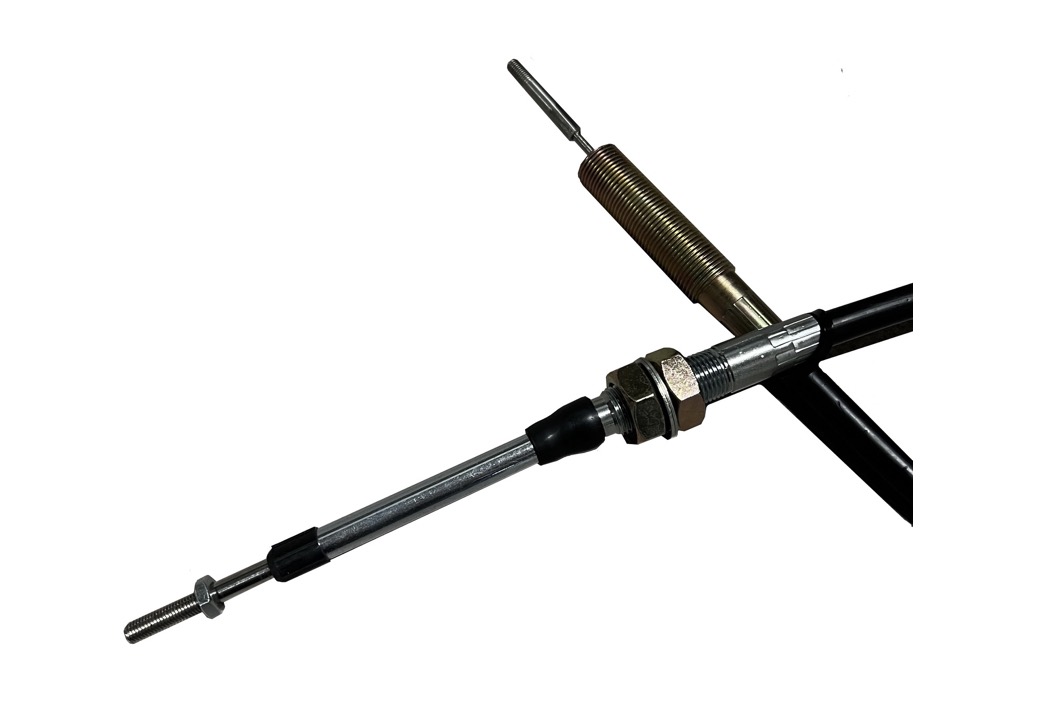
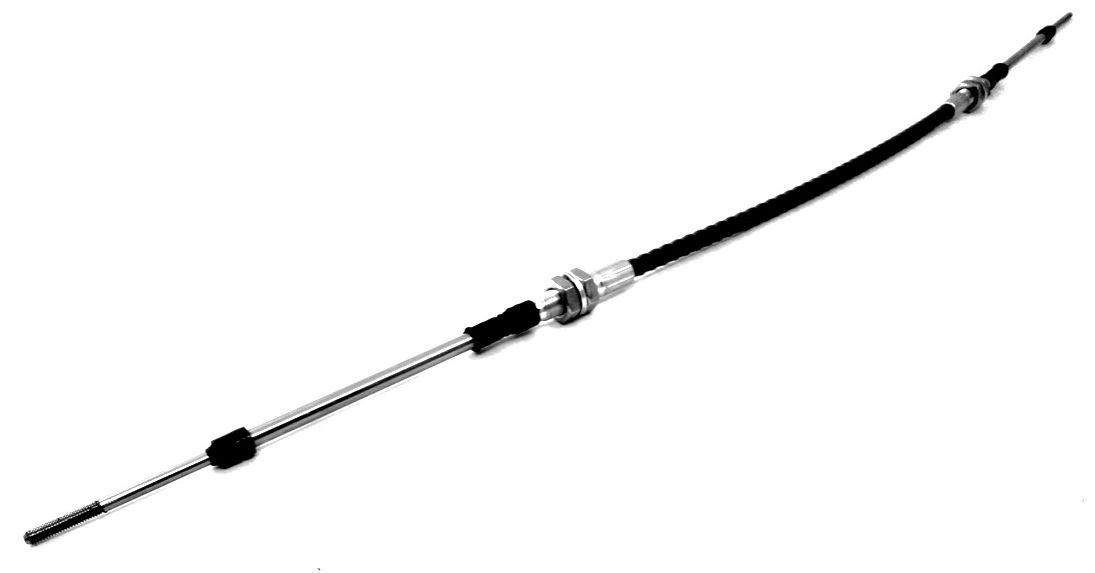
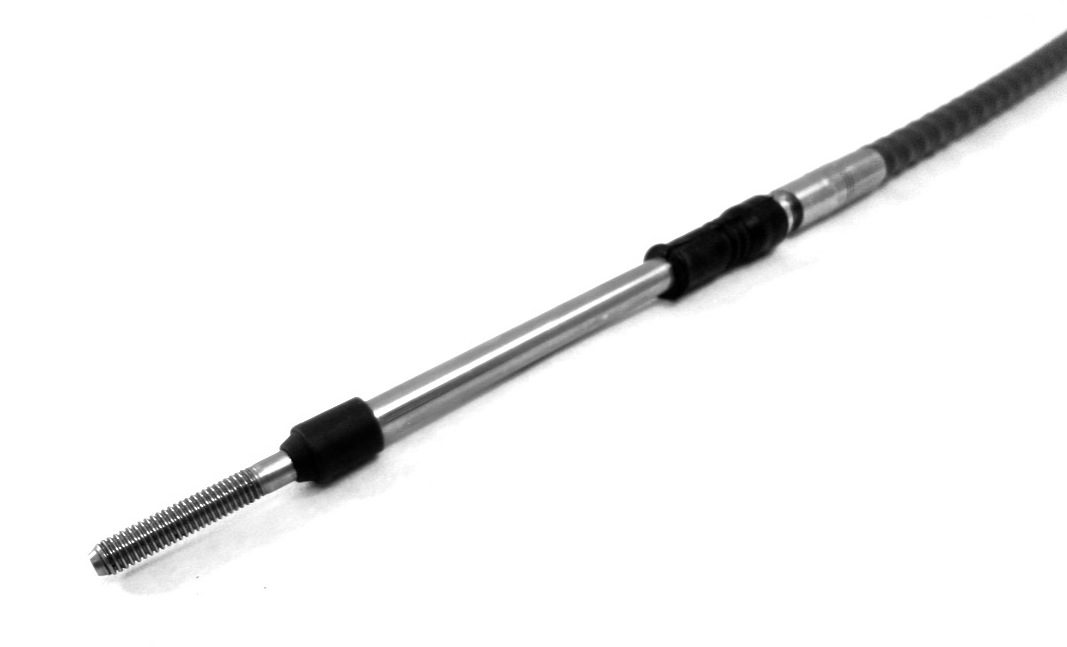
Standard and custom heavy-duty push-pull cables, threaded on one or both ends. True push-pull, not brake cable.
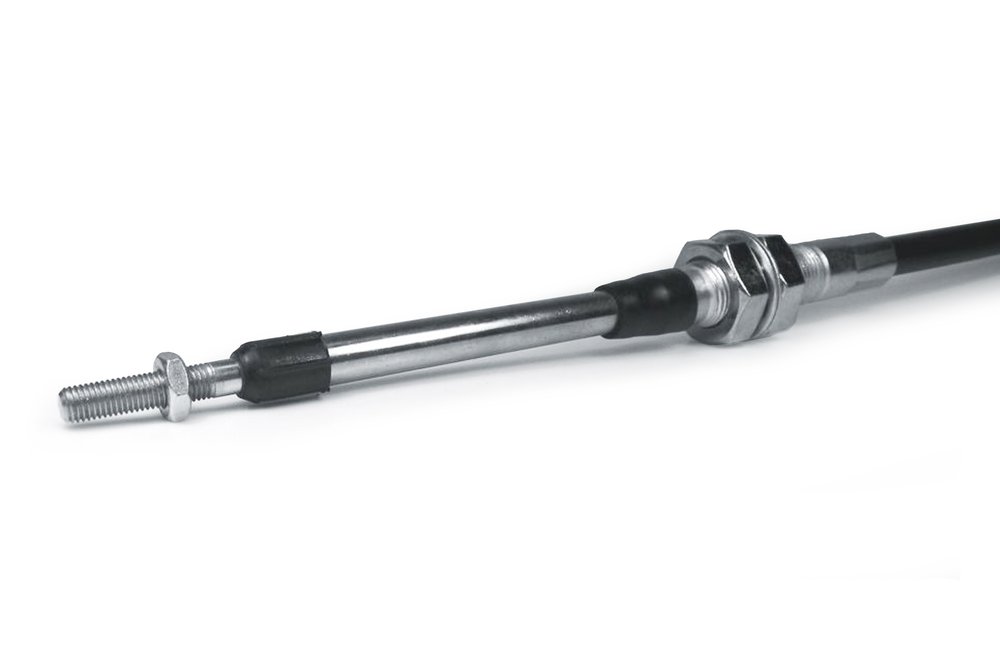
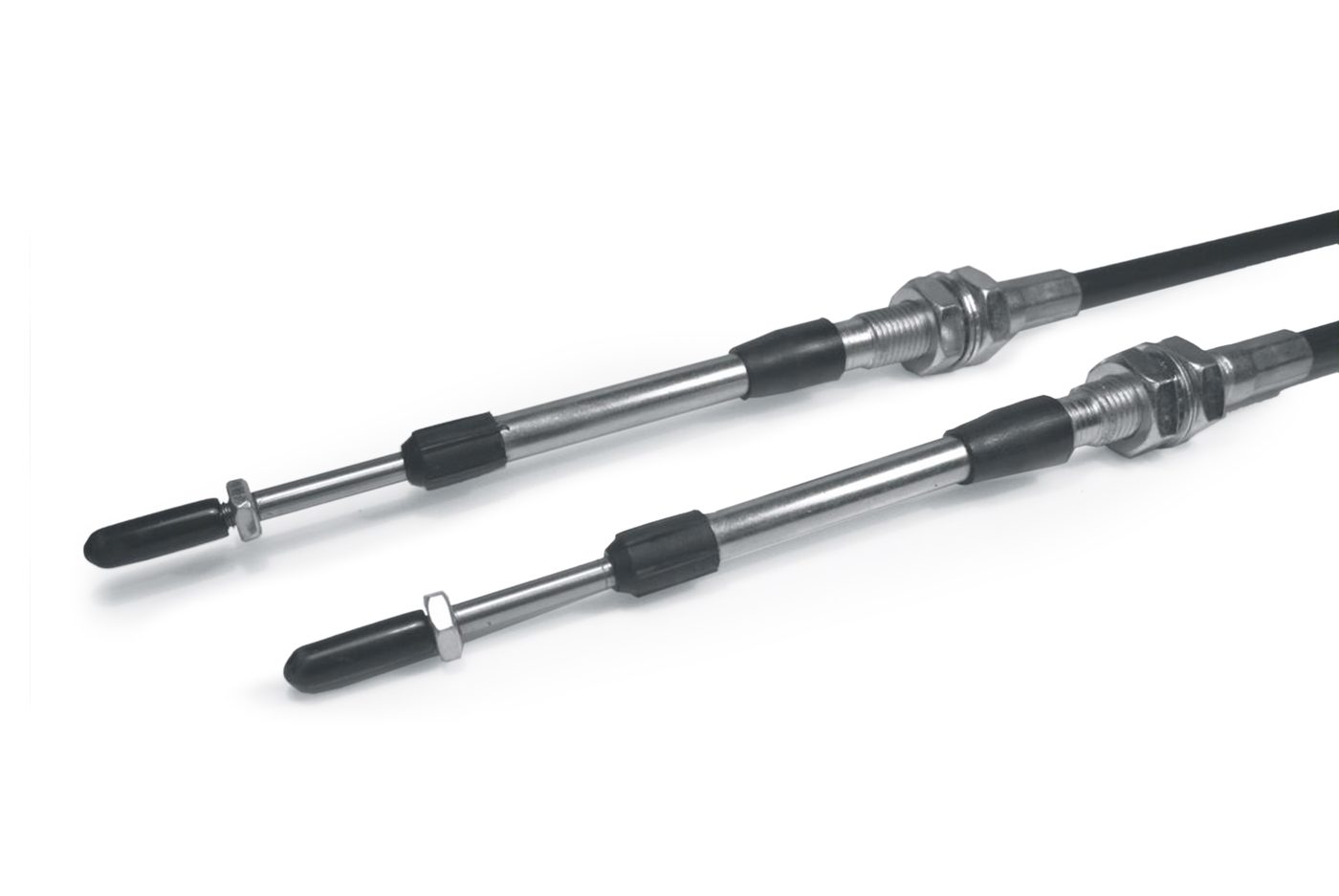
We build to your length and travel with two common conduit-mount styles: a grooved clamp and a bulkhead fitting. Representative comparison for 10-32 ends, 60 inches long:
| Qty | Grooved each | Bulkhead each | Add 2 ends + 2 nuts + assembly |
|---|---|---|---|
| 5 | $38.31 | $40.99 | +$11.55 to +$12.40 |
| 25 | $26.02 | $28.60 | +$4.95 to +$5.76 |
| 100 | $23.98 | $26.56 | +$3.98 to +$4.59 |
| 1000 | $21.80 | $24.21 | +$3.21 to +$3.56 |
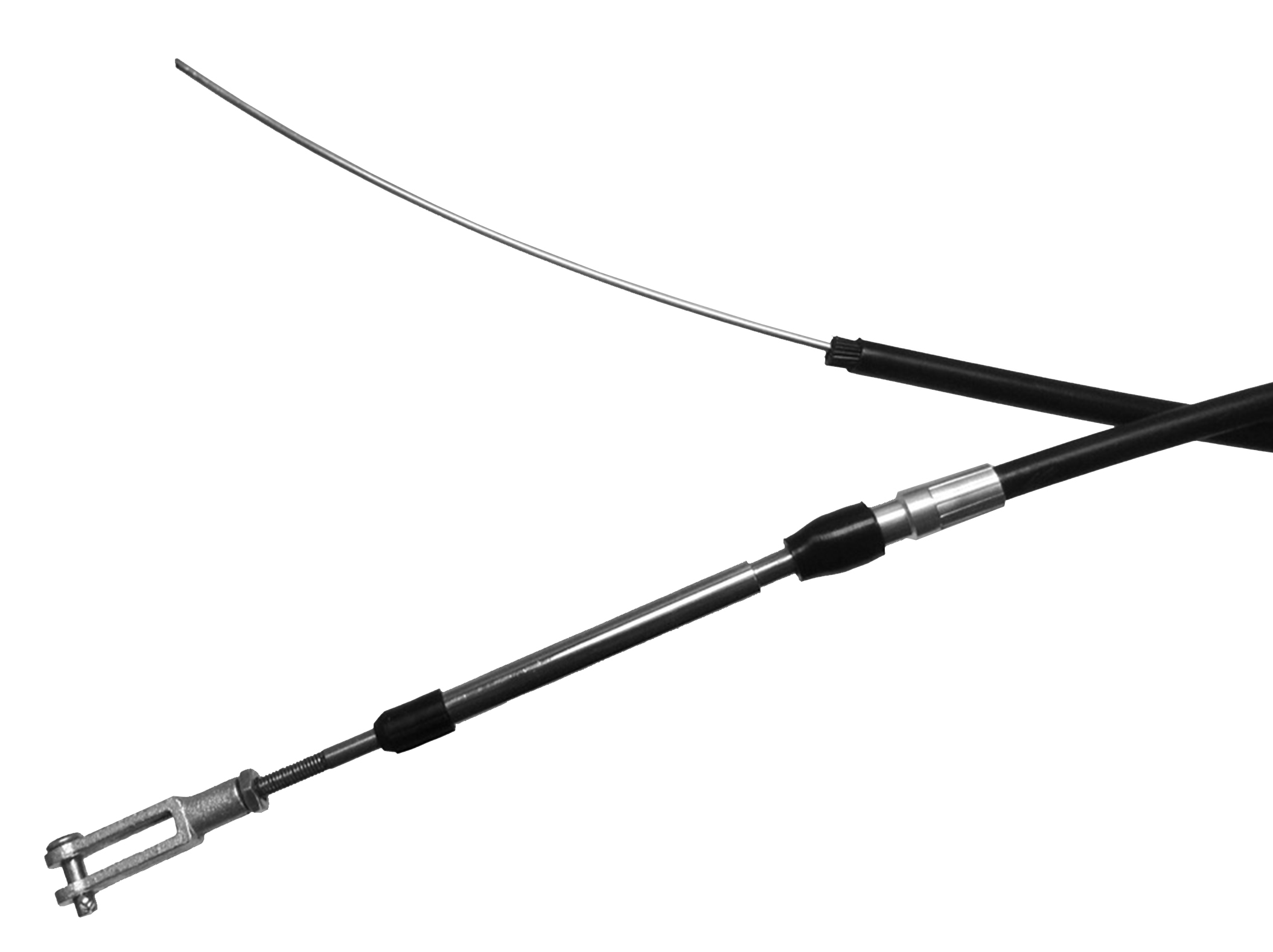
Clevis spring pins make assembly fast and add only a few cents per end.
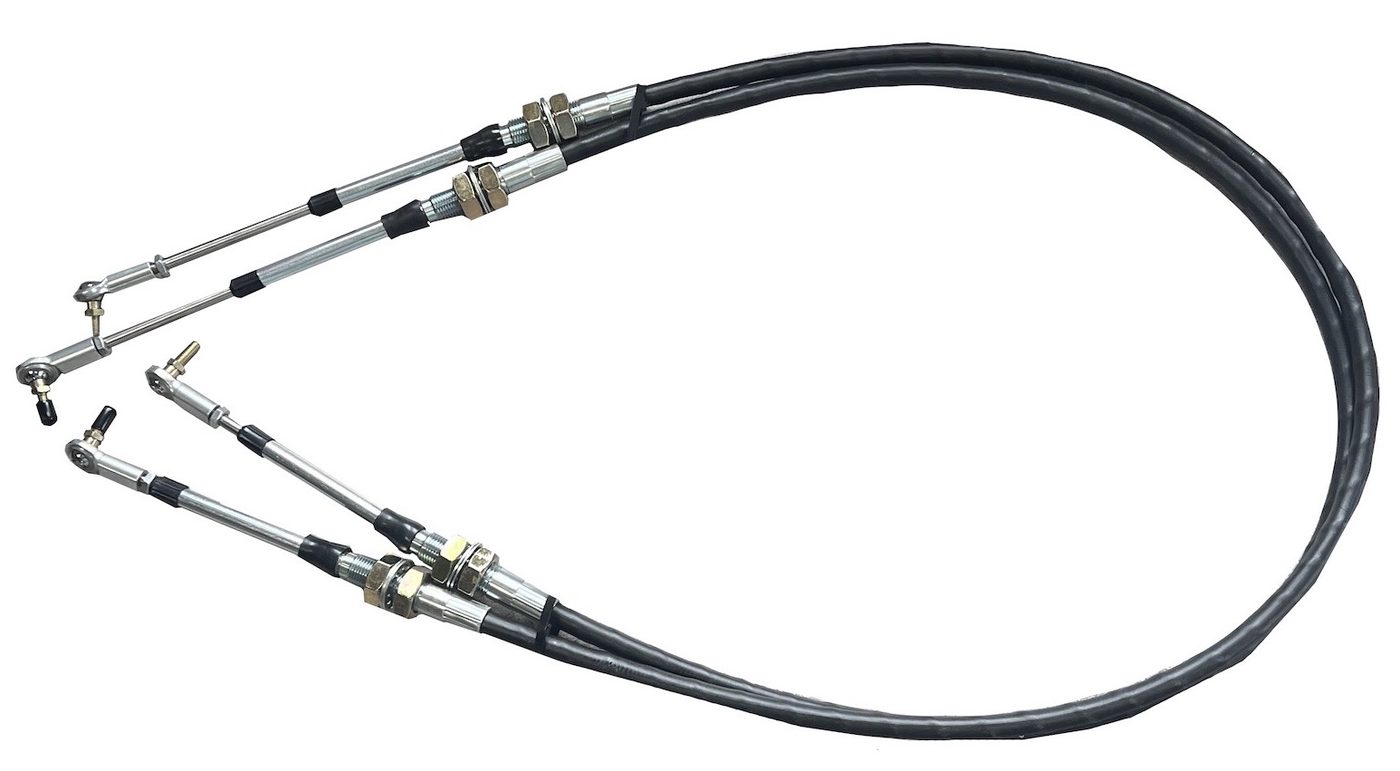
We build heavy-duty push-pull cables, and if one or both ends are threaded, it's probably in our niche. Most cables are customer-specific, but the catalog already shows over 1,500 designs, so there's a good chance you can find and order one quickly. For a custom cable, give us the thread size, overall length, travel, conduit end-fitting style, and volume, and we can usually price it the same day. We'll also look at pull-only cables that use a standard push-pull conduit, core and end-rod system.
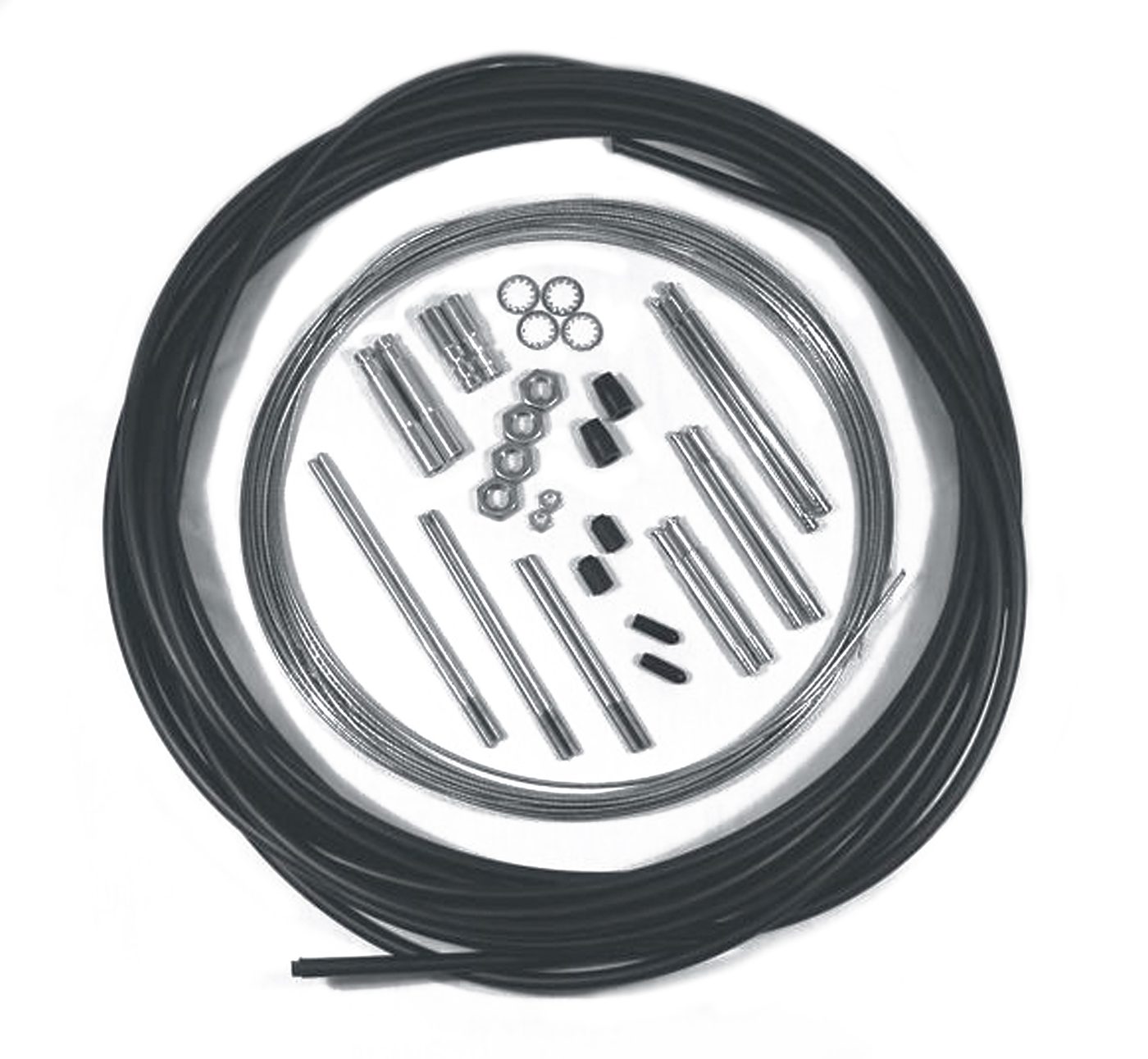
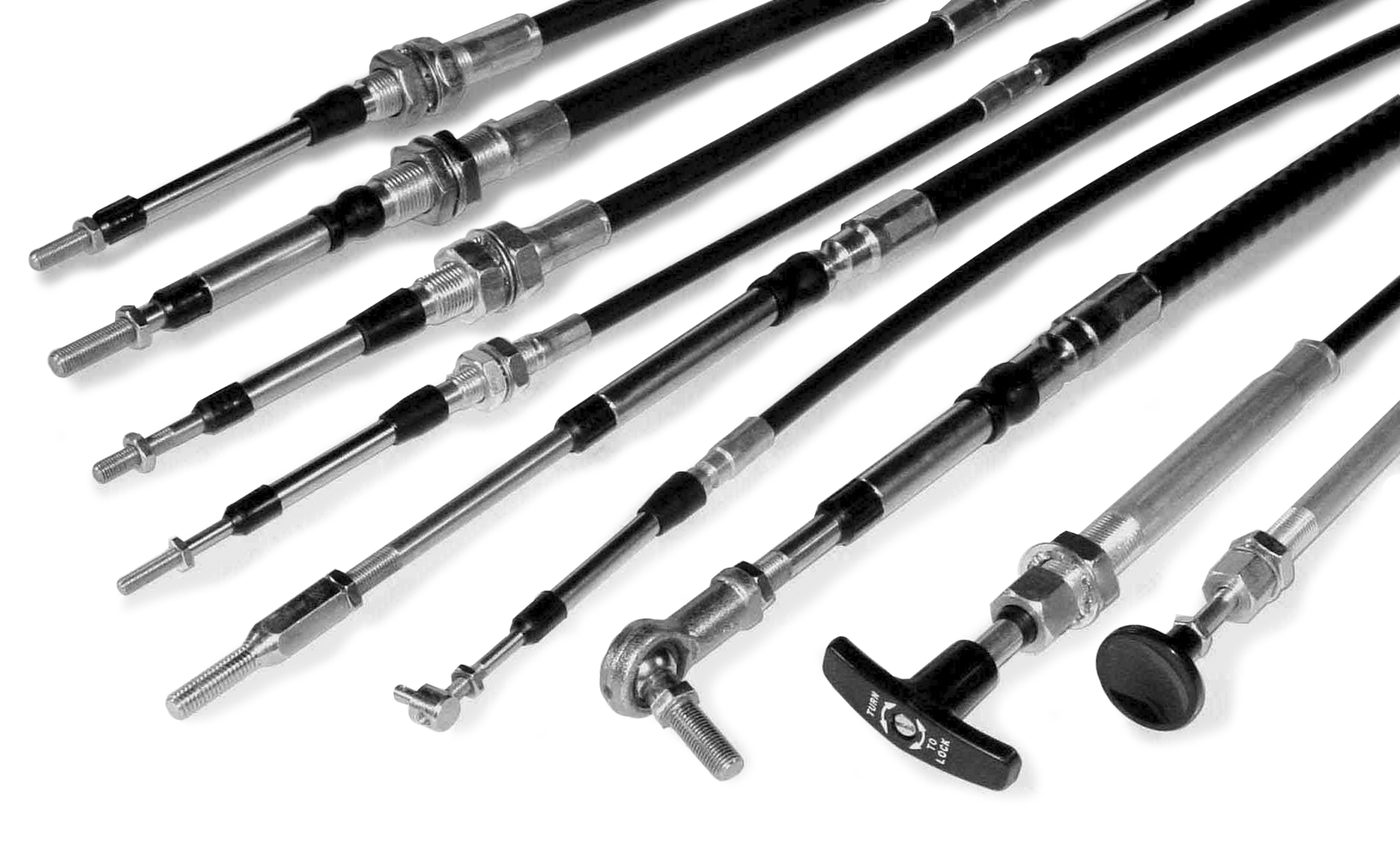
A range of conduit-end and output-end styles, plus subcomponents for shops that build their own assemblies.

Loads, geometry, environment and duty cycle all shape the right design. A few principles keep a cable efficient and durable. Use large bend radii and small bend angles: as the angle increases so does the effort to move the cable, and exceeding the minimum bend radius can kink the core inside the conduit. Keep runs as short as the layout allows, shorter cables are more efficient and lose less force. Remember a cable is strongest in pull, not push, so design the linkage to load it that way and add physical stops that make it impossible to exceed the load or travel rating. Keep the attachment within about 16° of the cable centerline, and center the usable stroke within the travel range.
Environment matters as much as mechanics. Keep cables away from fuels, oil, water, road salt, fertilizer and chemicals; don't lubricate them, and don't remove the seals or boots. A cable that has been frozen with moisture inside, or is missing its seals, should be replaced rather than dried out or reused.
The common failures are predictable. An end rod pulls off the core when nothing in the system stops a pure pull, so add a physical stop. An end rod shears under a side load it was never meant to carry. A conduit end fitting slides off when load is applied to the fitting instead of through the core, or when it's mounted at too sharp an angle. A guide tube fails at the fitting under any side load. Design the linkage so the cable only sees axial push-pull loads, use physical stops, and keep mounting angles gentle.